Videó beküldése
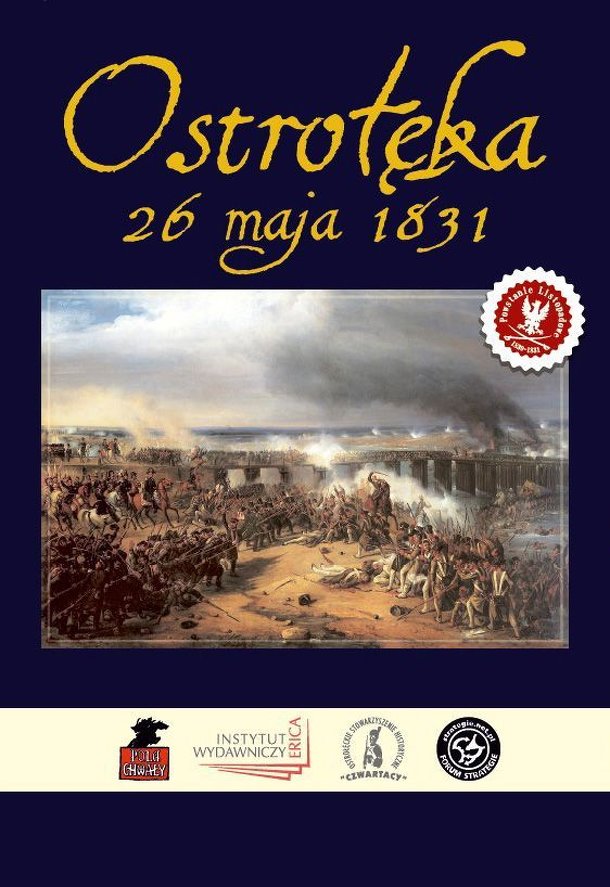
Ostroleka 26 maja 1831 társasjáték
társasjáték, 2015
Az Ostroleka 26 maja 1831 egy összetett társasjáték, 2 - 4 játékos részére, az átlagos játékidő hosszú, akár 3 - 10 óra is lehet. A társast, a bonyolultsága miatt, csak 16 éves kortól ajánljuk kipróbálni. A játékmenet erősen épít a hatszög-rács, a kockadobás és a váltakozó fázisok mechanizmusokra.
Az Ostroleka 26 maja 1831 egy összetett társasjáték, 2 - 4 játékos részére, az átlagos játékidő hosszú, akár 3 - 10 óra is lehet. A társast, a bonyolultsága miatt, csak 16 éves kortól ajánljuk kipróbálni. A játékmenet erősen épít a hatszög-rács, a kockadobás és a váltakozó fázisok mechanizmusokra.
Angol leírás
Ostrołęka 26 maja 1831 covers the battle of Ostrołęka, one of the largest engagements of Poland’s November Uprising. It was fought between Polish army commanded by general Jan Skrzynecki and Russian army commanded by field marshal Ivan Diebitsch. The battle was the final part of the operation of Polish army against Russian Imperial Guard. The meeting near Ostrołęka was a bit suprising for both sides, especially for Poles who didn’t expect such quick appearance of Russian forces near their positions. Polish army was divided into two parts. The first part was situated on the eastern bank of the river Narew. The second, larger part was put on the western bank of the river. In Ostrołęka there were two bridges connecting both banks of the river (one of them was pontoon bridge).
The first part of the battle was fought on the eastern bank of Narew. Polish forces tried to slow down an assault of Russians and withdraw to the western bank. Unfortunately, in consequence of earlier orders, one of Polish infantry brigades commanded by general Bogusławski was stayed to defend town Ostrołęka (situated on the eastern bank of the river), and there attacked by overwhelming Russians and partially routed, partially destroyed. Russians took control over Ostrołęka at noon. Then some Russian grenadier battalions decided to cross the river through the bridges to create a bridgehead for further operations. So started the second part of the battle. Polish main army began attacks to destroy Russian bridgehead and both brigdes to prevent main body of Russian army to cross the river. There were few attacks. At first they were not properly coordinated. Russian small forces on the bridgehead was supported by powerful artillery situated on the eastern bank of the river which was higher than western bank and allowed crossing fire (Russians formed two great batteries, one to the north and one to the south of Ostrołęka, and were shooting over own units on the western bank).
In the later afternoon Polish attacks became more coordinated. Russians tried to gain more terrain, but it moved them out of the range of their supporting artillery and encouraged Polish army to make last, most powerful attack, which was stopped near to the river. The battle ended a famous charge of Polish horse artillery battery commanded by lt. col. J. Bem, which caused great chaos in the Russian forces and discouraged Russians to make general cavalry attack on Polish army in the end of the battle as they were used to do in the Napoleonic Wars. When battle ended, both sides had similar casualties (about 6 000 killed, wounded etc.). The battle is considered Polish army defeat because it left the battlefield and during the night and the next day started retreat, not chased by Russians who first weren’t sure they had won. The main effect of the battle for Poles was the fall of morale of soldiers and the upper command, which allowed Russians to take initiative in the later part of Polish-Russian War.
Ostrołęka 26 maja 1831 contains three scenarios, with one made to introduce players to the system and two historical ones, showing both parts of the battlle. The game is quite complex, tending to show full spectrum of tactic of the Napoleonic and Post-Napoleonic period, but in reasonably easy way. Basic game mechanic is similar to Igo/Ugo movement, but with two phases of movement: for cavalry and infantry, and two combat phases: for cavalry and infantry. Horse artillery is generally attached to cavalry and foot artillery is attached to infantry. Additional rules offer another movement systems but rather designed for further battles based on this rules, not for that one. Rules offer many possible reaction activities for non-active player during opposite player phase. Another rules feature is an unique combat calculation system based on traditional odds ratio but originally modified. The rules focuse on simulating cooperation of three kinds of weapon (infantry, cavalry and artillery) on the battlefield and showing different formations (column, line, square, skirmish, buildings defense). The playing time varies depending on the scenario, from 2-3 hours to whole day. It also depends on the players – the longest scenario can be finished very quickly by autowin.
Components:
- One mapsheet 96 x 68 cm
- Nine sheets of die-cut counters (978 counters totally, most of them are markers)
- One sheet of additional counters
- One rulebook and scenariobook (both in one book)
- Three dices (D6)
- Six sheets with tables and player aids
- One sheet with units tables (alternative way of marking units loses)
Kategória:
Háború, Napóleon utáni
Mechanizmus:
Hatszög-rács, Kockadobás, Váltakozó fázisok
2
Párosan
Már ketten is játszható! Remek kikapcsolódás lehet pároknak is!
Hosszú
Hosszú játékidő! Ha egy egész estés/napos kikapcsolódásra vágysz ez a neked való!
Háború
A társasjáték témájának fontos része a háború, a különböző csaták és harcok!
Ostroleka 26 maja 1831 társasjáték vásárlása, árak és üzletek
Jelenleg egyik üzletben sem kapható a játék! Állíts be egy árufigyelést, hogy értesülj, amikor újra kapható lesz a boltokban!
Kommentek
Az Ostroleka 26 maja 1831 társasjáték és kiegészítői (2)
Ostroleka 26 maja 1831: Iganie 1831 társasjáték Kiegészítő
Iganie 1831 covers the battle of Iganie, one of the most brilliant victories of Poles over Russians during the November Uprising. It was fought between the Polish army commanded by General Ignacy Prądzyński and the Russian 6th Corps commanded by General Grigory Rosen. The battle was the final part of the Polish Spring Offensive. The goal of the operation...
- Játékidő: 240 perc
- Min. játékidő: 150 perc
- Max. játékidő: 240 perc
- Max. játékosszám: 2
- Min. játékosszám: 2
- Ajánlott életkor: 16+ éves
- Komplexitás: 4/5
Ostroleka 16 lutego 1807 társasjáték Kiegészítő
Ostrołęka 16 lutego 1807 covers the battle of Ostrołęka, fought on Feb. 16, 1807 between the French 5th Corps commanded by Gen. Jean-Anne-Marie Savary and the Russian Corps commanded by Gen. Ivan N. Essen. The main goal of the French Corps was to secure the supply line of Napoleon’s main army fighting with Gen. Bennigsen. Just after the bloody battle of...
- Játékidő: 600 perc
- Min. játékidő: 150 perc
- Max. játékidő: 600 perc
- Max. játékosszám: 4
- Min. játékosszám: 2
- Ajánlott életkor: 16+ éves
- Komplexitás: 5/5
Részletes adatok
Részletek
- Játékidő: 3 - 10 óra
- Játékosok: 2 - 4
- Ajánlott életkor: 16+
- Komplexitás: Összetett
- Tervező: Ryszard Kita
- Illusztrátor: Wojciech Dąbrowski, Szczepan Atroszko, Anna Andrzejewska-Godecka
- Kiadók: Instytut Wydawniczy Erica
- Elérhető nyelvek: lengyel
Kiadások
- First Edition
- Kiadás éve: 2015
- Nyelv: lengyel
Hasonló játékok
Az alábbi játékok a hasonlítanak leginkább a(z) Ostroleka 26 maja 1831 társasjátékhoz
Magyarország társasjáték keresője!
A társasjáték érték!

Legnépszerűbb
Hasznos linkek
Kapcsolat
Ha szeretnéd felvenni velünk a kapcsolatot nyugodtan írj egy e-mailt!
Email: info@tarsasjatekok.com2026 © Minden jog fenntarva. A játékokhoz kapcsolódó adatok és indexképek jelentős része a BoardGameGeek oldaláról származnak!